
In April 2026, Salone del Mobile in Milan did something it has never done before. It gave collectible design its own dedicated section, called Salone Raritas, sitting inside the world's largest furniture fair alongside the usual kitchen showrooms and lighting stands. Nearly two dozen galleries filled it, showing furniture built in editions of one or a handful, priced and traded the way paintings and sculpture are.
That is not a fashion moment. It is an industry finally catching up with a question serious buyers have been asking quietly for years. Can a piece of furniture actually hold or grow in value the way art does? And if so, what separates a piece that does from one that simply gets old and gets sold at a loss?
The honest answer is that some furniture behaves like an investment and most does not. The difference rarely comes down to price alone. It comes down to a handful of factors that collectors, museums and auction houses have quietly agreed on. This guide walks through what actually matters, using real examples, including a Duffy London piece that made exactly this journey in 2019.
What Is Collectible Design, and How Is It Different From Furniture?
Collectible design is the term the market has settled on for functional pieces, furniture, lighting and sculptural objects, made in a single edition or a strictly limited run by a named designer, with the same creative intent behind them as a painting or sculpture. It sits in the gap between decorative furniture and fine art, and increasingly, it is treated like both.
The distinction matters because it changes how a piece is bought, sold and valued. Mass produced furniture depreciates the way most manufactured goods do. Collectible design is instead judged on the things that determine value in the art market, who made it, how many exist, where it has been shown or acquired, and how well it is documented.
This is not a new idea so much as a newly formalised one. Galleries such as Carpenters Workshop Gallery in London and Friedman Benda in New York have spent close to two decades building collector demand for design the way art galleries build it for painters. What has changed recently is that the mainstream furniture industry has started building the same infrastructure.
The Milan Moment: Why Salone Raritas Matters
This is where Salone Raritas comes in. For the 64th edition of Salone del Mobile, running from the 21st to the 26th of April 2026, the fair carved out dedicated pavilions at Fiera Milano Rho specifically for collectible design. Curated by Annalisa Rosso and designed by the studio Formafantasma, the section brought together around 25 international galleries showing limited editions, antiques and one-off pieces, from historic names to contemporary makers.
Salone del Mobile is not a niche event. It is the largest furniture fair in the world, attended by manufacturers, buyers and press from across the globe. When an event of that scale creates a permanent section for collectible design, it is a signal to the entire industry, not just to existing collectors, that furniture with artistic intent behind it is now being treated as its own serious category.
For anyone weighing whether a piece of furniture is worth buying as more than just furniture, that institutional recognition is worth paying attention to. It means the infrastructure now exists, in galleries, at auction houses and at the fairs that set the industry's agenda, to support long term value in a way it simply did not a decade ago.
What the Auction Data Actually Shows
The market data backs up what Salone Raritas represents. According to the auction analysis platform ArtTactic, the design and decorative arts category grew 20.4 percent year on year in the first half of 2025 alone, reaching 172 million US dollars, outpacing several traditional fine art segments over the same period.
The clearest signal came in December 2025, when a one of a kind Hippopotame Bar by François-Xavier Lalanne sold at Sotheby's for 31.4 million US dollars after competitive bidding, the highest price ever paid for a work of design at auction, and a result that would have been unthinkable for a piece of furniture a decade ago.
It is worth being direct about what a sale like that does and does not prove. It shows that the ceiling for collectible design has risen dramatically at the very top of the market. It does not mean every limited edition piece will follow the same trajectory, and nobody should buy furniture assuming it will. Auction results like these are the exception that gets reported, not the average outcome. What they do confirm is that the infrastructure, meaning galleries, specialist auction departments and now major design fairs, now exists to support real long term value for the pieces that meet the right criteria.
What Actually Determines Whether a Piece Holds Its Value
Four things tend to separate furniture that holds value from furniture that does not.
Provenance and documentation come first. A piece with a clear paper trail, meaning who made it, when, and any exhibitions or acquisitions it has been part of, is worth more than an identical piece without that history, in the same way a documented painting is worth more than an unverified one.
Edition size is second. A design made to order in unlimited numbers behaves like ordinary furniture. A design capped at a fixed number of pieces, with each one numbered, behaves more like a print run, and scarcity is part of what supports value over time.
Material and craftsmanship matter too, though less than people assume. Expensive materials alone do not create a collectible object. What matters is whether the making process itself is part of the story, hand carved stone, hand finished glass, a construction method that cannot easily be reproduced at scale.
The fourth factor is recognition, specifically whether the piece or the designer has been recognised by galleries, critics or institutions beyond the maker's own marketing. This is the hardest factor to manufacture and the most reliable one. A designer can describe their own work as museum quality. Only a museum can actually make that true.
None of these factors guarantee a return. Furniture is a far less liquid market than stocks or even fine art, and selling a piece quickly, at a fair price, is genuinely harder than it looks from the outside. Buyers who go in expecting guaranteed appreciation are usually disappointed. Buyers who understand what they are actually buying tend to do better.
Why Museum Acquisition Is the Strongest Signal a Collector Can Look For

Of the four factors above, museum acquisition is the clearest one to point to, because it removes any doubt about who is doing the judging. A gallery has a commercial interest in a piece selling well. A museum does not.
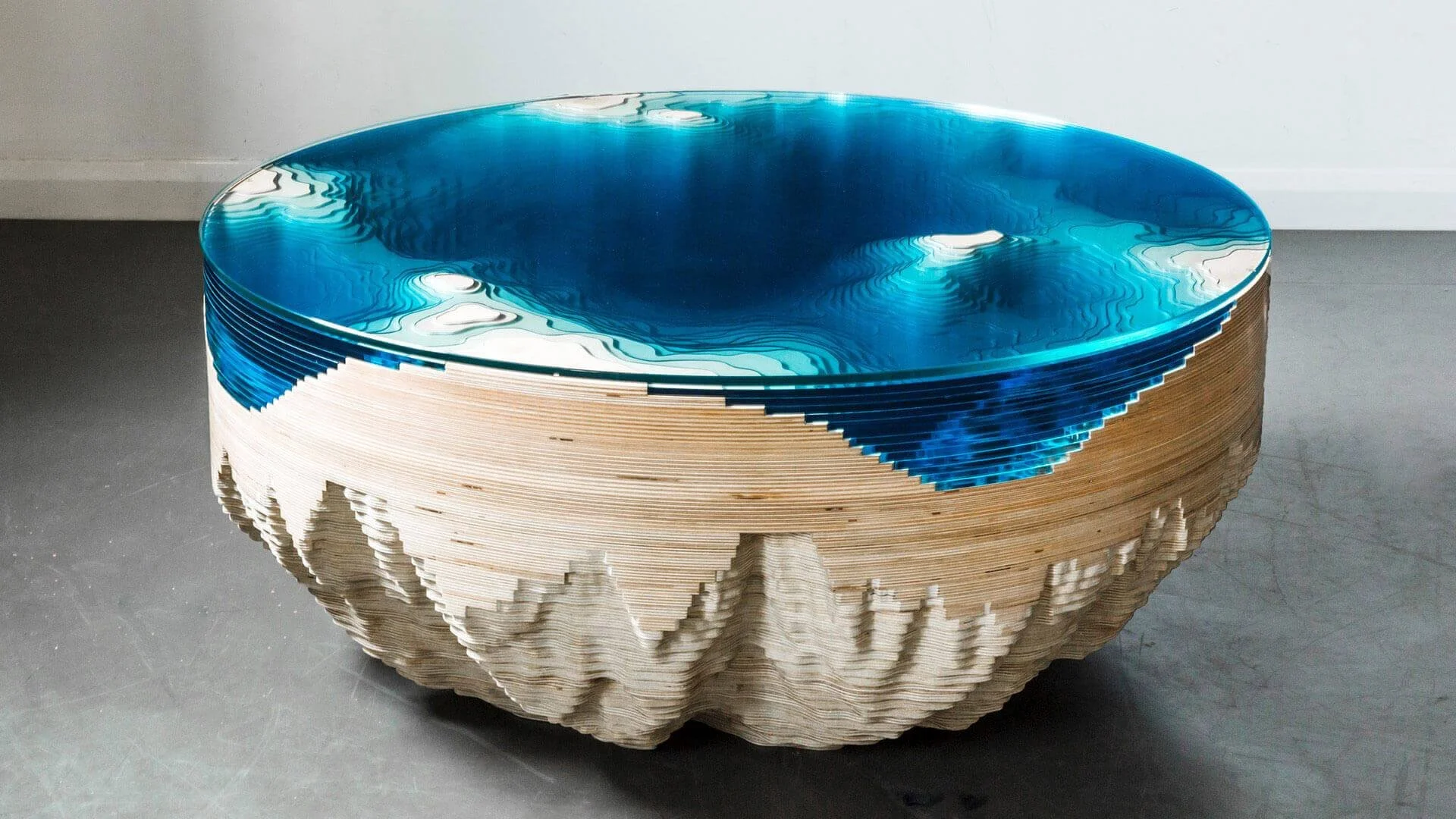
Duffy London's Abyss Table demonstrates why this matters. In 2019, the piece was acquired by the Musee des Arts Decoratifs at the Louvre in Paris, joining the permanent French national collection. That decision was made by curators, not by the studio, and it placed a piece of furniture in the same institutional category as objects that are unambiguously treated as art.
That single acquisition is now the reference point for everything the studio has built in stone and glass since. It is also the reason Abyss Marble, introduced a decade later, carries real weight rather than being just a new finish on an old design. The original earned its place. The marble edition inherited that credibility rather than having to build it from nothing.
For a buyer trying to judge whether a piece is genuinely collectible or simply expensive, this is the question worth asking directly. Has anyone outside the studio's own marketing recognised this work, and can that recognition be verified.
Limited Editions and Scarcity: What to Check Before You Buy

Edition size sounds like a simple thing to verify, and it should be. In practice, it is one of the details buyers forget to ask about.
At Duffy London, editions are capped and the numbers are specific rather than vague. The Abyss coffee table is limited to 25 pieces. The Balloon coffee and dining tables are limited to 25 pieces each, and the Balloon side table to 50. Those numbers matter because they are fixed. Once an edition sells out, no more are made in that specification, which is exactly the mechanic that supports value in a print run or a sculpture edition.
Before buying any piece of art furniture as an investment, three questions are worth asking directly. Is the edition size actually capped, or open ended and described as limited purely for marketing. Is your specific piece numbered within that edition. And is there documentation, in the form of a certificate, invoice or maker's record, that will still mean something if you sell the piece in ten or twenty years.
A studio that can answer all three clearly is treating scarcity as a genuine part of the work. A studio that cannot is usually just using the word limited as a sales term.
What a Bespoke Commission Actually Looks Like
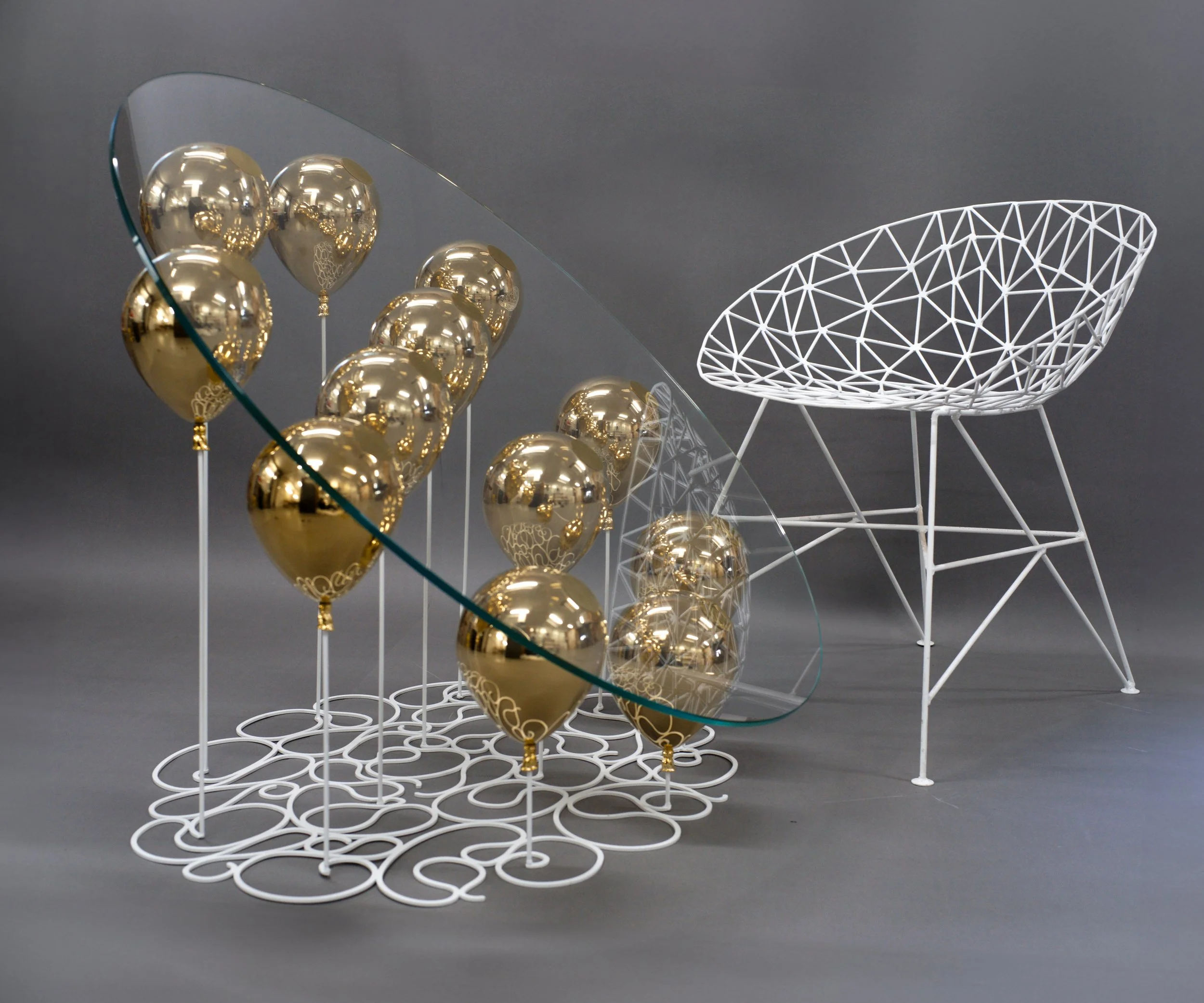
Everything covered so far in this guide applies to buying an existing limited edition. But some collectors want something no one else will ever own, not one of 25, not one of 50, but one of one. Duffy London builds those too, and a recent commission called 42 shows what that process can produce.
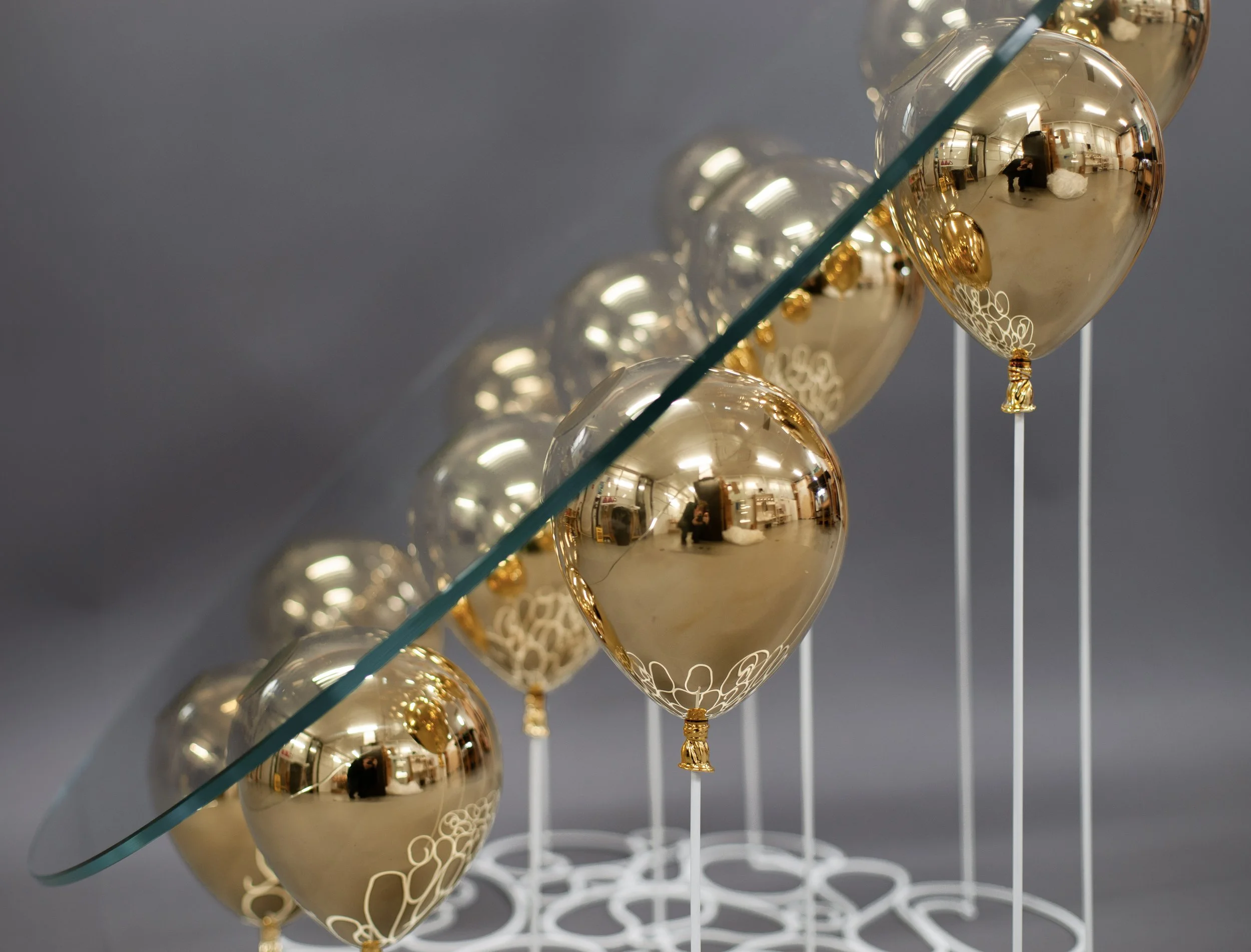
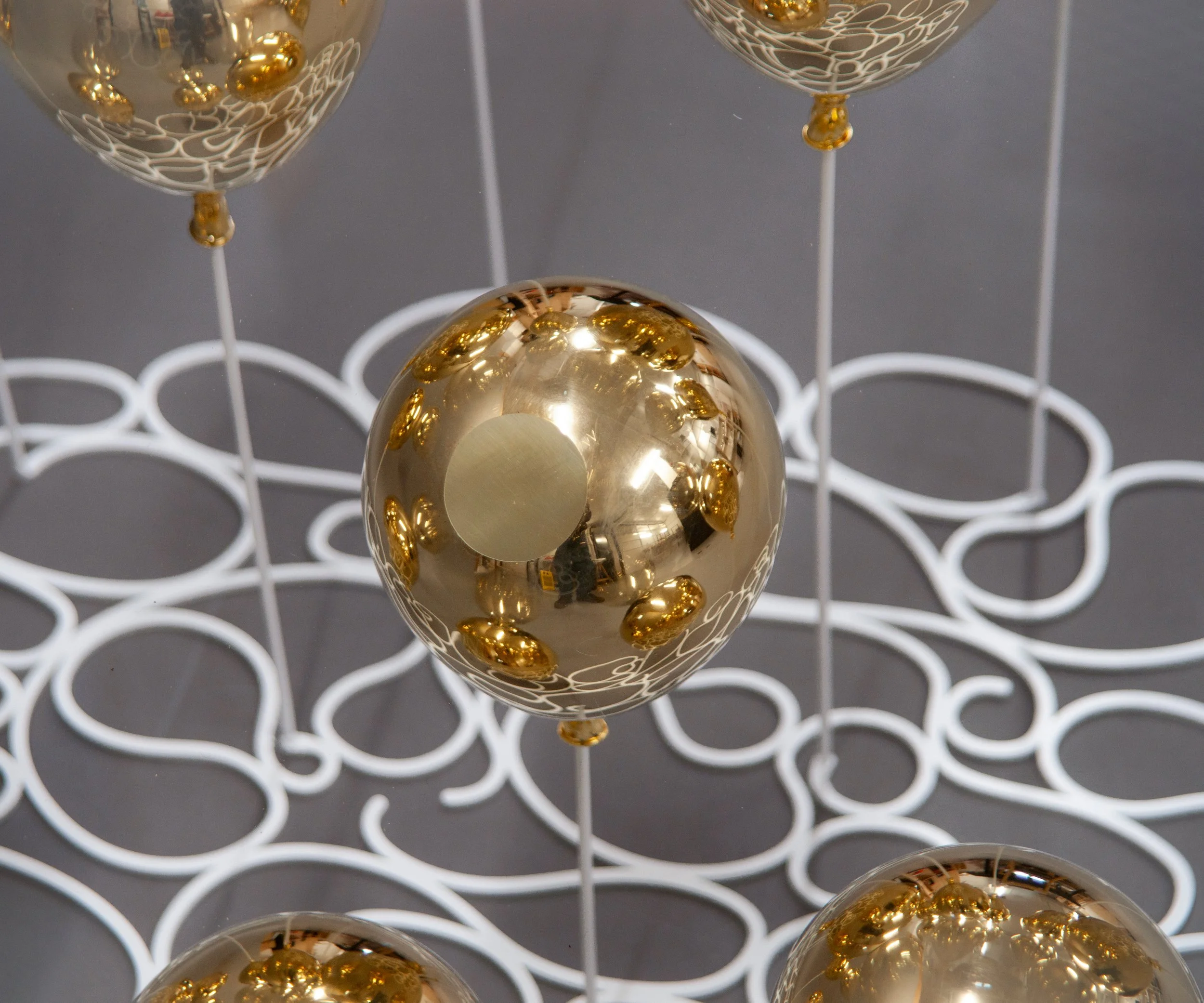
The piece was created for a collector named Iwik, built around the same floating illusion as the studio's Balloon collection, a cluster of mirrored balloon forms appearing to hold up a glass tabletop. What makes 42 a genuinely bespoke piece rather than a standard Balloon order is in the detail. Each balloon carries a fine, hand-etched white scroll pattern near its crown, with a gold tie finished at the base the way a real balloon is knotted off. The balloons rise from an ornate white wire base, its looping scrollwork built specifically for this commission rather than pulled from an existing design.
The name itself is the clearest signal of how personal a bespoke piece can get. In Douglas Adams' The Hitchhiker's Guide to the Galaxy, 42 is revealed as the answer to the ultimate question of life, the universe and everything, a joke about the gap between a profound question and an oddly specific answer. Both the collector and Christopher Duffy are fans of the book, and the number became the piece's title. That kind of reference only makes sense in a commission built around one person's taste, not in a piece made for an open edition.
This is the part of collectible design a catalogue cannot capture. A limited edition is still, by definition, one of a fixed run, 25 pieces, 50 pieces, a known number either way. A bespoke commission belongs to a single collector's story, from the reference points chosen down to the finish on a single balloon knot. For buyers weighing furniture as an investment, that distinction matters. Editions build value through scarcity within a known number. Bespoke pieces build it through being genuinely unrepeatable, a one-off with no second edition to compare it against, ever.
Duffy London takes on bespoke commissions like this for collectors internationally, working from an existing collection's language, Balloon, Abyss, Monument Valley, and building something specific to the person commissioning it.
Buying to Live With It, Not Just to Own It
It is worth saying plainly that furniture is a strange investment compared to a stock portfolio or even a painting kept in storage. You cannot sit on a share certificate. A piece of collectible design earns its place in a room every single day, long before anyone thinks about what it might be worth on resale.
That is arguably the strongest argument for buying it in the first place. Unlike most alternative assets, a piece of art furniture delivers value immediately, through daily use and the way it changes a room, regardless of what happens in the auction market over the following decade. If it also holds or grows in value because it met the criteria above, that is a genuine bonus rather than the entire point.
Buyers who approach it this way tend to make better decisions. They choose pieces they actually want to live with, from studios whose credibility they can verify, rather than chasing whatever a market report suggests might appreciate fastest. That instinct, more than any auction result, is usually what protects the purchase in the long run.
Where Duffy London Fits This Category

Duffy London's collections sit squarely inside the criteria this guide has covered. The Monument Valley collection is carved from single blocks of Italian and Portuguese marble, with each piece varying by the natural veining of the stone it was cut from. Kronos pairs a Carrara marble top with a base generated by a self-developed algorithm, so no two are ever quite identical.
None of that guarantees future value on its own, and this guide will not pretend otherwise. What it does mean is that the studio's work is built around the same factors, provenance, scarcity, craftsmanship and independent recognition, that determine whether collectible design holds up over time, with one acquisition already on record to prove it.
For anyone weighing a piece as more than just furniture, that combination, a verifiable museum acquisition, genuinely capped editions and hand finished materials, is the honest starting point. Get in touch to discuss a specific piece or a bespoke commission.
Frequently Asked Questions
-
Some furniture holds or grows in value, most does not. The pieces that do tend to share specific traits, a capped edition size, documented provenance, and recognition from galleries or institutions beyond the maker's own marketing. Furniture should not be bought purely as a speculative asset, since the market is far less liquid than stocks or shares. The most reliable approach is to buy pieces you genuinely want to live with, from studios that can prove their credibility, rather than chasing guaranteed returns.
-
Collectible design describes furniture, lighting or sculptural objects made in a single edition or a strictly limited run by a named designer, created with the same artistic intent as a painting or sculpture. It sits between decorative furniture and fine art, and is increasingly bought, sold and valued the same way art is, through galleries, specialist auction departments and dedicated design fairs.
-
No single factor guarantees future value, including museum acquisition. What it does provide is independent validation from an institution with no commercial interest in the sale, which is one of the strongest signals a buyer can look for. Duffy London's Abyss Table entering the Louvre's permanent collection in 2019 is an example of that kind of validation.
-
Edition sizes vary by collection and are capped rather than open ended. The Abyss coffee table is limited to 25 pieces. The Balloon coffee and dining tables are limited to 25 pieces each, and the Balloon side table to 50. Buyers can ask for documentation confirming a specific piece's number within its edition.
-
Ask whether the edition size is genuinely capped rather than marketed as limited without a fixed number, whether your specific piece is numbered, and whether documentation exists that will still hold up if you sell the piece years later. Also look for recognition beyond the studio's own marketing, such as gallery representation, press coverage or institutional acquisition.
-
Generally yes, though bespoke alone is not sufficient. A piece that is hand made to order but produced in unlimited numbers behaves differently to one made in a genuinely capped edition. The strongest position combines bespoke craftsmanship with a fixed edition size and independent recognition, which is where collectible design differs most clearly from mass produced furniture.
-
Yes. Alongside its numbered limited editions, the studio takes on one-off bespoke commissions for collectors, building on the language of an existing collection, such as Balloon or Abyss, but customised specifically for the person commissioning it. A recent example, 42, was created for a collector as a personalised take on the Balloon collection, referencing a shared interest between the collector and Christopher Duffy. Get in touch directly to discuss a bespoke commission.
Salone Raritas did not create the idea that furniture can be a serious collectible. It simply made official what the auction data, the gallery system and a handful of studios had already proven over the past two decades. Some furniture is built to be replaced. Some is built to be collected, lived with and, in rare cases, acquired by institutions that will still be showing it in a hundred years.
Duffy London's Abyss Table already made that journey once, in 2019, when the Louvre decided a coffee table belonged in its permanent collection. Whether any single piece will do the same is impossible to promise. What can be promised is that the studio's approach, capped editions, hand selected materials and work that has already been independently recognised, gives a piece the best possible foundation to be more than just furniture.
Browse the Abyss and Balloon collections, or get in touch to discuss a bespoke commission.
