Glass furniture has a reputation problem. Say the words and most people picture the same thing: a plain rectangular coffee table with a chrome frame, the kind that shows every fingerprint and adds little to a room beyond a surface to rest a mug on. That reputation is fair for most glass furniture on the market. But it misses what the material can actually do in the right hands.
Glass is not just a see-through alternative to wood or stone. Used properly, it becomes a way of showing things a solid material never could: layers underneath the surface, structures that appear to defy their own weight, light behaving in ways that change through the day. At Duffy London, glass sits at the centre of some of our most recognised pieces. This guide looks at what makes glass furniture worth a second look, how it differs across coffee tables, dining tables and smaller pieces, how it is actually made, and what living with it day to day involves.
What Makes Glass Different from Every Other Material
Glass does one thing no other furniture material can: it disappears. A glass tabletop does not visually compete with what is underneath or around it, which means the structure holding it up, or whatever is layered beneath the surface, becomes the actual design.
It also plays with light in a way that changes through the day. Clear glass catches and bends natural light. Tinted glass shifts colour depending on what is behind it. Toughened glass panels can be layered to create depth that a single solid surface cannot fake. The other advantage is contrast: glass looks and feels almost weightless, so pairing it with something visibly solid, carved wood, brushed steel or a sculptural base, creates tension that makes both materials more interesting than either would be alone.
How Glass Furniture at This Level Is Actually Made
This is the section most competitors skip, and it is also the one that explains most clearly why designer glass furniture costs what it does.
Toughened, or tempered, glass is the starting point for almost all serious glass furniture. It is treated under heat and rapid cooling so that if it ever does break, it fractures into small, blunt pieces rather than sharp shards. This matters for anything at coffee table or dining table height in a real home.
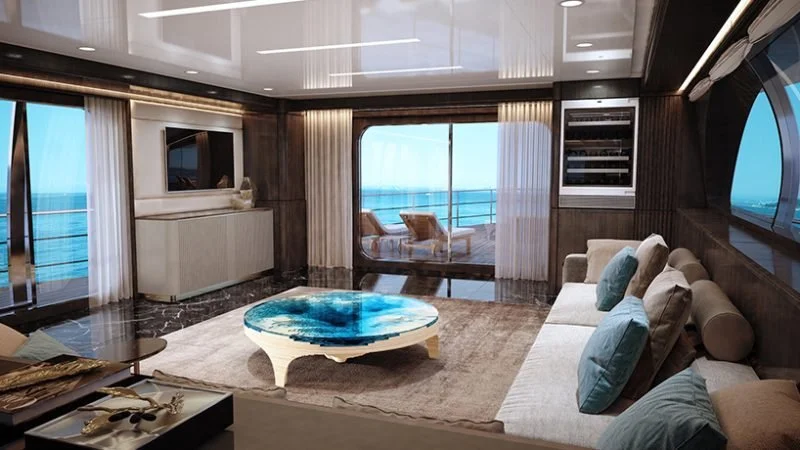
From there, the process depends on the design. For a layered piece like the Abyss collection, sheets of glass are tinted first, then cut to shape and set against sustainably sourced birchwood in careful sequence, so the colours build the illusion of ocean depth from the surface downward. Each layer has to be tinted, cut, positioned and finished individually before the next is added. Christopher Duffy and the studio spent around a year developing and refining this process when the design was first created.
For an illusion piece like the Balloon collection, the visible glass and metal balloon forms hide a more complex internal structure, engineered to bear the full weight of the tabletop safely, which is not obvious just from looking at the finished piece. Every piece is handmade to order in the London Docklands studio, with lead times typically running eight to fourteen weeks depending on the design and any bespoke finish requested.
Glass Coffee Tables: Turning a Functional Piece into a Visual Trick
The Abyss collection coffee table is the clearest example of what glass can do beyond acting as a plain surface. Layers of tinted glass are set against sustainably sourced birchwood to build a three-dimensional cross-section that reads like a slice through the ocean floor, turquoise depths fading into darker layers the further the eye travels into the piece. In 2019, the Abyss Table was acquired by the Musee des Arts Decoratifs at the Louvre in Paris, joining the permanent French national collection. That is a benchmark almost no piece of glass furniture, anywhere in the world, has ever reached.
The Balloon collection takes the opposite approach. A toughened glass tabletop appears to float, held up by nothing more than a cluster of metal balloons finished in gold, silver, rose gold or black. The glass itself is straightforward. The trick is in the engineering hidden inside the balloon forms. It is a reminder that glass furniture does not need to be visually complicated to make an impact: sometimes the illusion is in what surrounds the glass, not in the glass itself.
Both approaches solve the same problem in different ways: they turn a glass coffee table from something people rest a cup on into something people stop and look at first.
Glass Dining Tables: Bringing Drama to Everyday Meals

A dining table gets more daily use than almost any other piece of furniture, so a glass dining table has to earn its place rather than just look good in a showroom. The Abyss dining table extends the same ocean cross-section concept across a full-size table, with the topography splitting into separate segments suspended on mirror-polished steel plinths. The eye follows the coastline-like pattern from one end of the table to the other.
The Balloon dining table applies the same floating illusion at a larger scale, a full glass dining surface appearing to rest on a set of metal balloons rather than legs.
For something more architectural, the Megalith collection pairs toughened glass with monolithic steel forms inspired by Brutalist architecture, precisely engineered despite an appearance of impending collapse. What all three share is the same underlying idea: a glass surface only works as a dining table if what is holding it up gives people a reason to look twice before they even sit down.
Glass Coffee Table vs Marble Coffee Table: Which One Is Right for a Room
This is one of the most common questions for anyone choosing between the two materials at the luxury end of the market, and the honest answer is that they do different things.
A marble coffee table brings weight, permanence and natural variation. It dominates the room quietly and tends to anchor a space rather than open it up. A glass coffee table does the opposite: it expands a room visually, draws the eye to what is around and beneath it, and creates a sense of lightness that marble cannot. If you have a heavily furnished room, glass tends to be the more considered choice. If the room is spare and the table needs to carry it, marble tends to win.
At Duffy London, we make both, and pieces like the Monument Valley dining table, which pairs a sculpted marble base with a glass tabletop, resolve the question differently again by using both materials in a single design.
Glass Side Tables and Consoles: Small Pieces with Big Personality
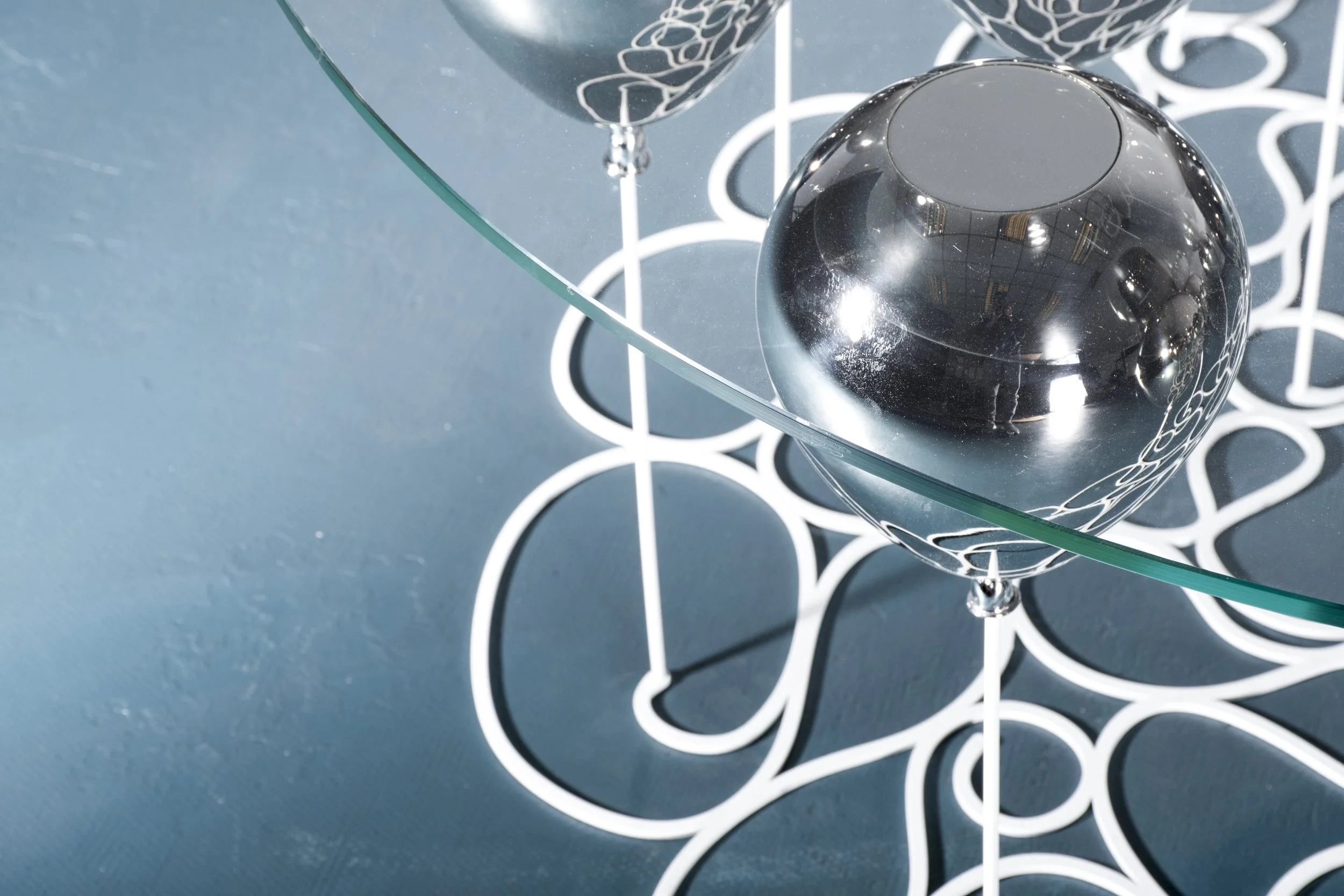
The Balloon side table takes the same floating glass illusion and scales it down to something that works beside a sofa or armchair, available as a single piece or as a set of four grouped together. Because the footprint is small, it is often the easiest way to introduce a glass piece into a room without it dominating the space.
Smaller glass pieces also make sense as a way of testing an idea before committing to a larger table. The same engineering and finish quality carries across the whole collection, so a side table gives a genuine sense of how a larger dining or coffee table version would feel in the same room.
Living with Glass Furniture Day to Day
Glass shows fingerprints and dust more readily than wood or stone, so it needs wiping down more often to stay looking sharp. A microfibre cloth with standard glass cleaner is enough for daily upkeep. Avoid anything abrasive that could scratch the surface over time.
Toughened glass is significantly more resistant to impact than standard glass, but it is not indestructible. Avoid dragging heavy or sharp objects directly across the surface. Beyond that, glass furniture is genuinely low maintenance: no sealing or reconditioning required the way there is with wood or stone.
Is Glass Furniture a Good Investment
Bespoke glass furniture at this level sits apart from anything available on the high street, largely because of the engineering hidden behind a simple-looking surface. Our Balloon collection is priced from around £2,000 up to £12,000 depending on the piece and finish, which reflects the scale of the design and the handwork involved in disguising the supporting structure inside each balloon form.
There is also a rarity factor built into pieces like these. Most editions are limited: the Balloon side table to 50 pieces, the Balloon coffee and dining tables to 25 pieces each, and the Abyss coffee table to 25 pieces. Owning one is closer to owning a numbered artwork than a mass-produced table. The Abyss has already been recognised at exactly that level, with the table entering the Louvre's permanent collection in 2019.
Frequently Asked Questions
-
Toughened glass, which is what all serious glass furniture is made from, is significantly stronger than standard glass. It holds up well for years with normal use, though like any glass surface it should be protected from sharp impacts and dragged objects.
-
Toughened glass resists everyday scratching well, but abrasive cleaning pads or dragging ceramics and metal objects across the surface can dull it over time. A soft cloth and standard glass cleaner is all that is needed for regular care.
-
At Duffy London, the Balloon collection runs from roughly £2,000 to £12,000 depending on the piece. Larger or more complex glass pieces are priced individually. Get in touch directly for a quote on a specific design.
-
Yes. Most pieces can be adapted in finish, colour and in some cases scale, since each is handmade to order. The Balloon collection is available in metallic finishes, including gold, silver, rose gold and black.
-
Typically, eight to fourteen weeks from order to delivery, depending on the design and any bespoke requirements. More complex layered pieces take longer to fabricate than simpler glass and metal designs.
-
Yes. Toughened glass is designed with safety in mind and is standard for furniture at this level. As with any glass piece, it is sensible to consider placement around very young children, but the material is built to withstand daily household use.
-
A standard glass coffee table is a flat sheet of glass on a simple frame. A designer glass coffee table uses the material as part of a considered concept: layering it to create depth, engineering around it to create the illusion of floating, or combining it with other materials in a way that makes the glass the medium rather than just the surface. The Abyss and Balloon collections are both examples of glass used this way

Glass furniture only feels ordinary when the glass is doing the least it possibly can: sitting flat on four legs with nothing to say for itself. Used the way it is across the Abyss, Balloon and Megalith collections, it becomes a way of hiding structure, revealing depth, or creating an illusion that a solid material could never pull off.
If you are drawn to what glass can do in a room, explore the Balloon and Abyss collections, or get in touch with the studio to discuss a bespoke commission.
